
Yamaha 5HP 4 Stroke Outboard Motor Review (2026): Is It Worth Buying?

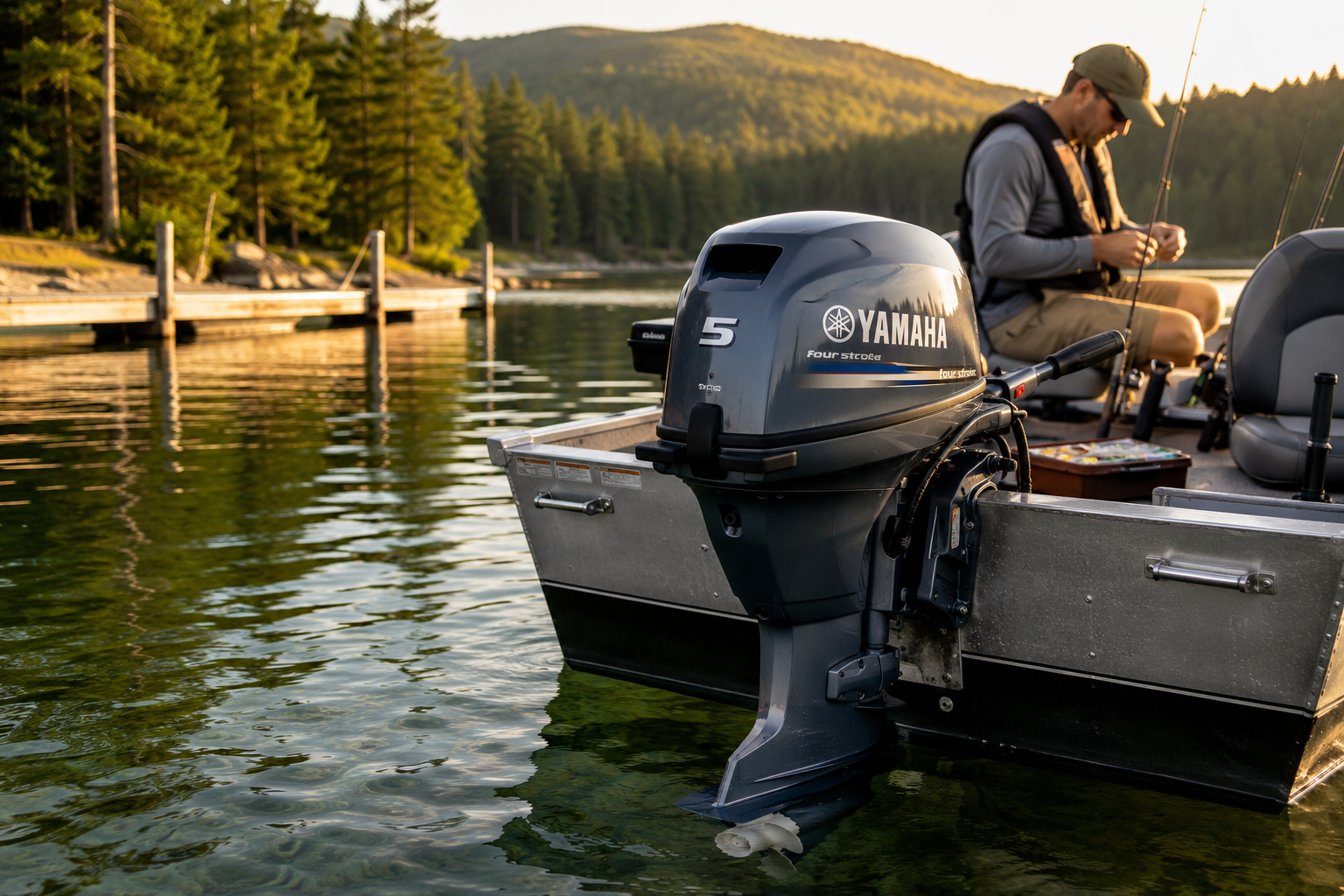
If you’re shopping for a small, dependable engine for a tender, inflatable, jon boat, or sailboat auxiliary, chances are the Yamaha 5HP 4-stroke outboard motor has landed on your shortlist. It sits in an unusual sweet spot bigger than a 2.5HP “get-me-home” motor, lighter than the 6HP, and backed by a brand that’s practically synonymous with outboard reliability. We break down everything you need to know about the Yamaha 5HP outboard, including its real-world performance, specs, pricing, ideal users, and whether it’s still worth buying in 2026.
Quick Verdict
The Yamaha F5 is a genuinely well-built, low-maintenance portable outboard that punches above its weight for dinghies, small tenders, and light aluminum boats. It isn’t flashy, and buyers in the United States will notice Yamaha has largely folded this horsepower bracket into its F4 and F6 models domestically. But the F5 remains a strong, widely available choice in the UK, Europe, Australia, and many other international markets. If reliability and resale value matter more to you than shaving a few dollars off the sticker price, it’s worth buying.
What Exactly Is the Yamaha F5?
The Yamaha 5hp 4-stroke outboard motor (factory model code F5A, sold as the F5AMHS in short-shaft form and F5AMHL in long-shaft form) is a single-cylinder, air-cooled-intake, water-cooled 4-stroke portable engine built around a 139cc block. It uses Yamaha’s CDI ignition system, a built-in fuel tank, tiller steering, and a manual pull-start.
Where things get a little confusing for shoppers is regional availability. In several international markets, including the UK, continental Europe, Australia, and parts of Asia. The F5 remains a current production model sold through official Yamaha dealers. In the US market, Yamaha’s current small-portable lineup instead centers on the F2.5, F4, and F6, meaning American buyers searching for a “5hp Yamaha outboard” will often find the F5 through used listings, older dealer stock, or by cross-shopping the F4/F6 instead. It’s worth confirming with a local dealer which version is currently sold in your country before you commit.
Yamaha 5HP 4 Stroke Outboard: Full Specifications
| Spec | Detail |
| Engine type | 4-stroke, 1-cylinder, CDI ignition |
| Displacement | 139cc |
| Cooling | Water-cooled |
| Weight | Approx. 27 kg (60 lbs) short shaft / 28 kg (62 lbs) long shaft |
| Shaft lengths | Short (15″) and Long (20″) |
| Starting | Manual pull (recoil) start |
| Steering | Tiller handle |
| Gear shift | Forward-Neutral-Reverse |
| Fuel tank | Built-in, with external tank connection option |
| Trim/tilt | Manual |
| Propeller | Aluminum, included |
| Ignition | CDI |
| Recommended fuel | 87 octane, max 10% ethanol blend |
These numbers matter because they explain exactly where this engine excels: it’s light enough for one person to carry, simple enough to have almost nothing to go wrong, and powerful enough to move small craft at a reasonable clip without guzzling fuel.
Performance: What It’s Actually Like on the Water
A 5-horsepower engine was never going to win any speed contests, and that’s not the point. On a lightweight tender, inflatable, or small jon boat (roughly 8–11 feet), the 5hp Yamaha outboard motor comfortably pushes the boat to a workable cruising speed while sipping fuel; owners regularly report getting several hours of run time from the small built-in tank at moderate throttle.
Where it really shines is low-speed manoeuvrability. The tiller control is light, the shift between forward, neutral, and reverse is smooth, and the motor idles quietly enough that you can hold a conversation next to it. Use it as an auxiliary “get you home” motor on a small sailboat, or power a dinghy with it as you shuttle between shore and a moored yacht. In either role, the motor delivers exactly the performance you need.
Don’t expect to plane a heavier boat, and don’t expect neck-snapping acceleration. This is a motor built for calm, dependable propulsion, not thrills.
Build Quality and Reliability
This is really where Yamaha earns its reputation. The F5 uses the same CDI ignition, thermostatic cooling, and wet-sump lubrication philosophy found across Yamaha’s larger portable range, which means fewer moving parts to fail and a well-proven parts and service network behind it. Owners commonly report a decade or more of trouble-free use with basic annual servicing (oil change, spark plug, water pump impeller checks).
The oil-leak-prevention design also deserves a mention; you can lay the motor on its side for transport or storage without oil draining into the cylinder, which is a small but genuinely useful convenience feature for anyone who has to haul the engine in a car boot or on a dinghy locker.
Pros and Cons
Pros
- Lightweight and genuinely portable; one adult can carry and mount it solo
- Renowned Yamaha reliability and long service life
- Low fuel consumption at cruising throttle
- Quiet running compared to many small 2-stroke alternatives
- Wide dealer and parts network, strong resale value
- Forward-Neutral-Reverse shifting (not all engines this small offer reverse)
Cons
- Manual start only, no electric start option at this horsepower
- No power trim, manual tilt only
- Limited to very light boats; not suitable for anything requiring real load-carrying power
- Discontinued from Yamaha’s current US catalog, complicating sourcing for American buyers
- Higher upfront price than off-brand or budget 4-stroke alternatives
Yamaha 5HP Outboard vs. the F4 and F6
If you’re comparing across Yamaha’s small-portable range, the differences are subtle but matter:
- F4 (4HP): Nearly identical 139cc block, marginally less power, slightly cheaper, a good choice if you don’t need the extra horsepower and want to save some money.
- F5 (5HP): The middle ground, same footprint and weight class as the F4/F6, more power than the F4, and where sold, often priced closer to the F4 than the F6.
- F6 (6HP): Similar weight and dimensions but with a bit more punch and, in the current US lineup, an available higher-output alternator, worth considering if you’ll be charging a battery or running electronics off the motor.
In practice, unless you have a specific reason to want exactly 5 horsepower (some countries cap unlicensed dinghy engines at 5hp, for instance), the decision often comes down to whichever of the F4/F5/F6 family your local dealer actually stocks.
Yamaha 5HP Outboard Motor for Sale: Where to Look
If you’re searching for a 5hp Yamaha outboard motor for sale, here’s how to approach it sensibly:
- Start with an authorized Yamaha dealer near you. Search “Yamaha outboard dealer” plus your city or region, authorized dealers can confirm current regional availability, provide full factory warranty coverage, and handle pre-delivery inspection and rigging.
- Check marine chandleries and boating retailers, especially in the UK, Europe, and Australia, where the F5 is still actively stocked.
- Consider certified pre-owned or used listings if you live in a market like the US where Yamaha has phased out new F5 production. Reputable marine dealers often service and warranty used outboards before reselling them.
- Compare total cost, not just sticker price, factor in the propeller, any required rigging, delivery/fitting fees (many dealers require professional installation to preserve warranty), and ongoing servicing costs.
- Verify shaft length before buying. Measure your transom height and match it to the short (15″) or long (20″) shaft version; the wrong shaft length is one of the most common and easily avoidable buying mistakes.
A quick call or message to two or three local dealers asking for current pricing and stock is the most reliable way to get an accurate, up-to-date number for your area, since pricing varies significantly by region, currency, and dealer promotions.
Is the Yamaha 5HP 4 Stroke Outboard Worth Buying in 2026?
For the right use case, yes. If you need a light, quiet, fuel-efficient engine for a dinghy, tender, small aluminum boat, or as an auxiliary for a sailboat, the Yamaha F5 delivers exactly what it promises: dependable, low-drama power backed by one of the most trusted names in outboards. The trade-offs no electric start, no power trim, and a modest top-end- simply reflect what this horsepower class is designed for.
Where it’s sold as current stock, it remains one of the better all-around choices in its class. Where it’s been phased out (notably the US), it’s still very much worth chasing down through a dealer’s remaining stock or a well-maintained used unit, or comparing directly against the F4 and F6, which share most of its DNA.
Frequently Asked Questions
How much does a Yamaha 5HP 4-stroke outboard weigh?
Around 27 kg (60 lbs) for the short-shaft version and 28 kg (62 lbs) for the long-shaft version, making it easy for one person to lift and mount.
Does the Yamaha F5 have reverse gear?
Yes. Unlike some ultra-small portables, the F5 offers full Forward-Neutral-Reverse shifting.
What fuel does the Yamaha 5HP outboard use?
Standard 87-octane unleaded fuel with a maximum ethanol blend of 10%.
Is the Yamaha 5HP outboard still available new?
It depends on your region. It remains in current production in several international markets, but has been phased out of Yamaha’s current US catalog in favor of the F4 and F6. Check with a local authorized dealer to confirm availability where you live.
What size boat is a 5HP outboard suitable for?
Small tenders, inflatables, dinghies, and light jon boats generally under 11–12 feet, or as an auxiliary engine on a small sailboat.