
Why Is It So Hard to Find a Qualified Outboard Mechanic?

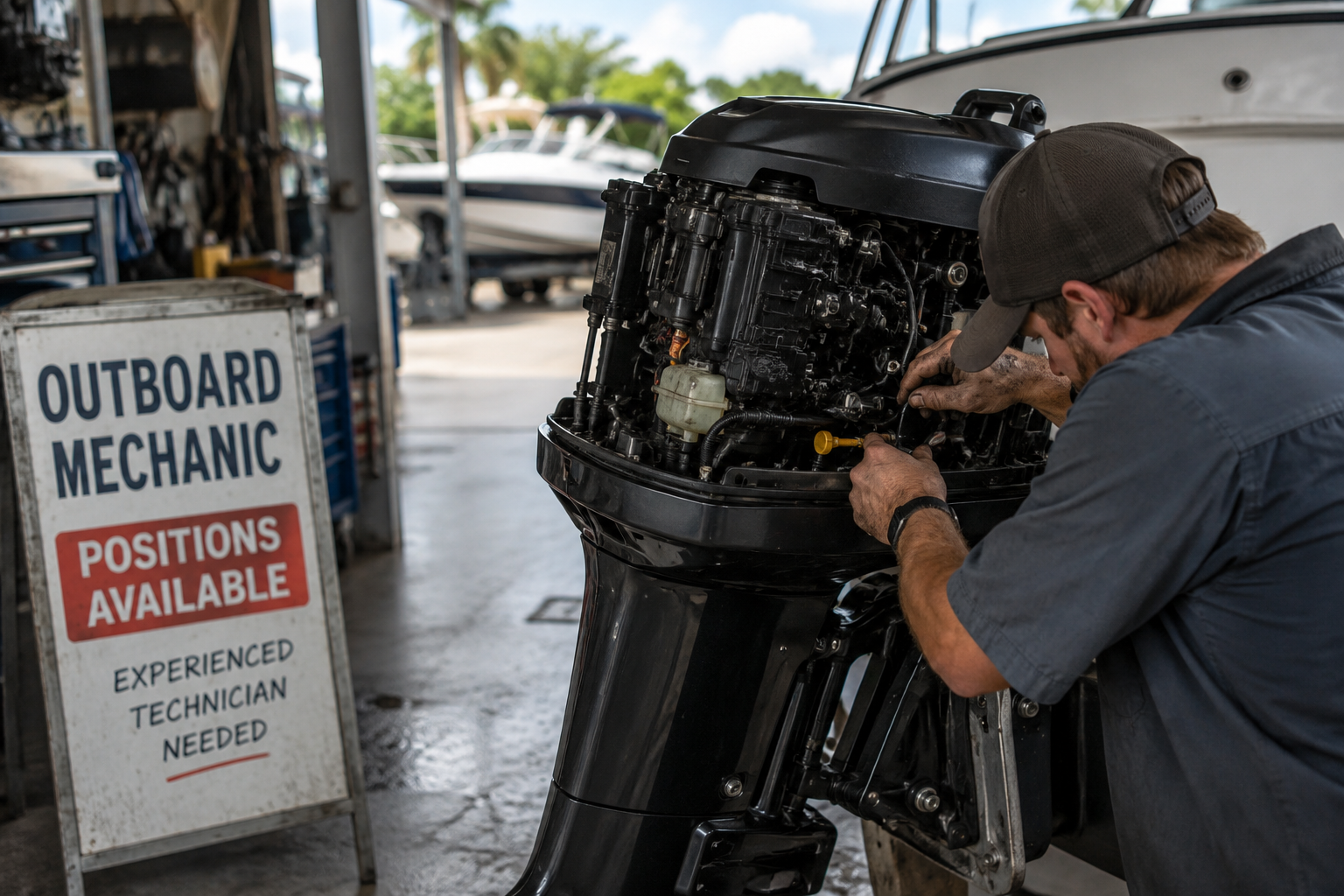
If you’ve ever stood at the dock with a sputtering outboard and a long weekend ahead, you already know the sinking feeling, no pun intended. You start calling around, and suddenly it hits you: finding a qualified outboard mechanic is surprisingly, frustratingly difficult.
You’re not alone. Boat owners across the country are dealing with the same problem, long wait times, shops turning away new customers, and a shrinking pool of technicians who truly know their way around a marine engine. But why is this happening? And what can you actually do about it?
Let’s break it all down.
The Skilled Trades Gap Is Real and It’s Hitting Marine Mechanics Hard
The skilled trades shortage isn’t just a headline. It’s something boat owners feel every time they try to book a service appointment. For years, high schools and guidance counselors pushed students toward four-year college degrees, quietly steering them away from trades like plumbing, electrical work, and yes, marine mechanics.
The result? An aging workforce with very few younger technicians coming up behind them. According to industry insiders, the average age of a certified marine technician is well above 45. Many experienced mechanics are retiring, and there simply aren’t enough trained replacements waiting in the wings.
This isn’t a small-town problem either. Even in coastal communities with heavy boating cultures, such as Florida, the Great Lakes region, and the Pacific Northwest, certified outboard technicians are stretched thin.
Outboard Engines Are More Complex Than Most People Realize
Here’s something a lot of boat owners don’t fully appreciate until they’re staring at a repair bill: modern outboard engines are incredibly sophisticated machines.
Today’s outboards aren’t the simple two-stroke carbureted motors your grandfather tinkered with in the garage. They’re four-stroke, fuel-injected, computer-controlled systems with CAN bus networks, digital throttle-and-shift systems, and proprietary diagnostic software. Brands like Yamaha, Mercury, Suzuki, Honda, and Evinrude each have their own unique architecture, and their own dealer-exclusive diagnostic tools.
That complexity means:
- General automotive mechanics can’t easily cross over. An auto tech who’s great with cars may struggle with marine cooling systems, corrosion-proofing requirements, and saltwater-specific engineering.
- Each brand requires specialized training. A Mercury-certified tech isn’t automatically qualified to work on a Yamaha F150. Mechanics often need brand-specific certification, and those programs take time and money.
- Software updates and electronics are now part of the job. Modern outboard service isn’t just wrenches and oil. It involves ECU reprogramming, digital rigging calibration, and network diagnostics.
All of this creates a high barrier to entry that weeds out generalists and demands true specialists.
Certification Requirements Aren’t Easy to Meet
Becoming a qualified outboard mechanic isn’t something you can do in a weekend course. Most manufacturers require technicians to complete formal training programs, often through the American Boat and Yacht Council (ABYC) or manufacturer-specific certification tracks.
These programs involve:
- Hundreds of hours of hands-on training
- Written technical exams
- Ongoing recertification as engines evolve
- Significant out-of-pocket costs for shop owners sponsoring their techs
For small independent marine shops, which make up a large portion of the industry, sponsoring a technician through full manufacturer certification can cost thousands of dollars per brand. Many small shops simply can’t afford to train and certify staff across every brand they service.
And if a newly certified tech gets poached by a larger dealer? The shop eats that investment with nothing to show for it.
The Seasonality Problem Makes It Worse
Unlike auto repair, outboard mechanic work is brutally seasonal in most parts of the country. In northern states, the boating season runs roughly May through September, maybe six months of heavy demand. The other six months? It’s slow.
That seasonality makes it hard to:
- Attract full-time talent. Skilled workers want stable, year-round income. A job that slows to a crawl in November isn’t appealing to someone with a family to support.
- Justify hiring more staff. Shop owners hesitate to bring on additional technicians when they know winter will kill the workload.
- Retain experienced people. When winter hits, some techs take side gigs, or leave the trade entirely for more stable work.
Coastal and southern markets have it better, but even there, summer demand spikes create backlogs that stretch wait times to three, four, sometimes six weeks during peak season.
Independent Shops Are Disappearing
Walk around a marina today and count how many independent marine service shops you see. Then compare that to what was there ten or fifteen years ago. In many areas, the numbers have quietly dropped.
Why? A few reasons:
Dealer consolidation. Large, brand-affiliated dealerships have absorbed a lot of the service business. They have the tools, the manufacturer support, and the certified technicians. But they’re also overwhelme, and often prioritize customers who bought their boat from them.
Rising overhead. Waterfront property is expensive. Tools, lifts, and diagnostic equipment are expensive. Insurance is expensive. Running a marine repair shop is a high-cost business with thin margins, and many small operators have simply closed up rather than fight those economics.
Retirement without succession. When an experienced independent mechanic retires, the knowledge doesn’t automatically transfer to someone new. In many cases, that expertise simply walks out the door.
What Boat Owners Are Feeling on the Ground
Talk to any active boat owner, and you’ll hear stories like these:
“I called seven shops before I found one willing to take my boat. The wait was five weeks.”
“My regular guy retired last year, and I still haven’t found anyone I trust to replace him.”
“The dealer will only service engines they sold. Since I bought used, I’m on my own.”
This isn’t an exaggeration. These are real experiences that get repeated in boating forums, Facebook groups, and marina docks every single season. The frustration is widespread, and it’s pushing some boat owners to attempt DIY repairs they’re not really equipped to handle, which often turns small problems into expensive ones.
How to Actually Find a Qualified Outboard Mechanic (Practical Tips)
Okay, so the problem is real. But you still need your engine serviced. Here’s what actually works:
1. Start With Manufacturer-Certified Dealers
Look for dealers that are certified by your engine’s manufacturer, Yamaha, Mercury, Suzuki, etc. These dealers have factory-trained technicians and access to proprietary diagnostic tools. Yes, they’re often busy, but they’re your safest bet for complex repairs.
2. Ask at the Marina
Marina dockmaster staff often know exactly who the best local techs are, including independent operators who don’t advertise much. Word-of-mouth in the boating community is gold.
3. Check ABYC Certification
The American Boat and Yacht Council (ABYC) maintains a directory of certified marine technicians. An ABYC-certified tech has demonstrated real competency, it’s a meaningful credential, not just a business card.
4. Join Local Boating Forums and Facebook Groups
Online boating communities are incredibly active. Post in a local group asking for mechanic recommendations, and you’ll often get honest, experience-based answers within hours.
5. Book Early — Well Before You Need It
Don’t wait until your engine has a problem. Find a good mechanic during the off-season, schedule annual service before spring, and build that relationship before an emergency forces your hand.
6. Be Willing to Pay for Quality
A qualified outboard mechanic who knows their stuff is worth every penny. If you find one, don’t nickel-and-dime them. Fair pay builds loyalty, and in a market this tight, having a trusted mechanic in your corner is genuinely valuable.
The Bigger Picture: What Needs to Change
The outboard mechanic shortage isn’t something any individual boat owner can fix. But awareness matters, both for boat owners who need to plan realistically, and for the industry that needs to respond.
Some positive signs are emerging:
- Marine trade programs are being added or expanded at some vocational schools and community colleges.
- Manufacturers are investing more in technician training and making certification more accessible.
- The boating industry’s growth during and after the pandemic brought new attention to the workforce gap, prompting associations like the NMMA to push for solutions.
But change in skilled trades pipelines is slow. Realistically, the shortage is likely to persist for the next several years before the pipeline catches up.
Final Thoughts
Finding a qualified outboard mechanic is hard because the problem is structural, not accidental. A generational workforce shift, increasing technical complexity, brutal seasonality, and a shrinking pool of independent shops have all combined to create a real shortage of skilled marine technicians.
What’s the best thing you can do as a boat owner? Build relationships early, book service proactively, and treat a good mechanic like the rare and valuable professional they are.
Because honestly, they are.And here’s one more thing worth considering: sometimes the repair bills, the wait times, and the constant search for a reliable tech are a sign that your current engine has simply run its course. If you’re at that point, it might be the right time to buy a newer, more reliable outboard motor that’s easier to get serviced under warranty. AtOutboardMotorsShop, you’ll find a wide selection of outboard motors built for real boaters. If you’re upgrading, replacing, or rigging a new boat from scratch. Skip the stress of aging equipment and get back to what matters: time on the water.